LeShuttle • D6 screens
Artwork specs & creative guidance
Everything you need to build creative for the LeShuttle D6 screens — the technical specification, how to supply your files, and what tends to work in a terminal full of waiting travellers.
The specification
| Screen type | High-definition portrait LCD |
|---|---|
| Resolution | 1080 × 1920 pixels |
| Orientation | Portrait (9:16) |
| Advert / slot length | 10 seconds |
| Frames per second | 30 |
| Supported formats | MP4 or JPEG |
| Maximum file size | No larger than 2GB |
| Location | LeShuttle Terminal, Folkestone |
Everything on this page is also in the downloadable production spec, which is the version to forward to a creative agency.
What works on these screens
Six things that separate a good D6 ad from a wasted slot
Design for the glance, not the dwell
Your slot is 10 seconds, but nobody watches for 10 seconds. Travellers look up, take it in, look away. Assume the message has to land in a fraction of the slot — and that many people join partway through the loop.
One idea per execution
A screen is not a brochure. Pick the single thing you want remembered — a destination, an offer, a name — and give it the whole frame. If you are trying to say three things, you need three executions, not a busier one.
Brand early, brand throughout
Resist the end-frame reveal. Because people arrive mid-loop, a logo that only appears in the final second is a logo most of your audience never sees. Keep it present the whole way through.
Type big, contrast hard
These are read standing, in a bright terminal, from a few metres away, often at an angle. Headline type wants to be readable at a glance on a phone-sized preview — if it fails that test, it will fail on the screen.
Build for portrait from the start
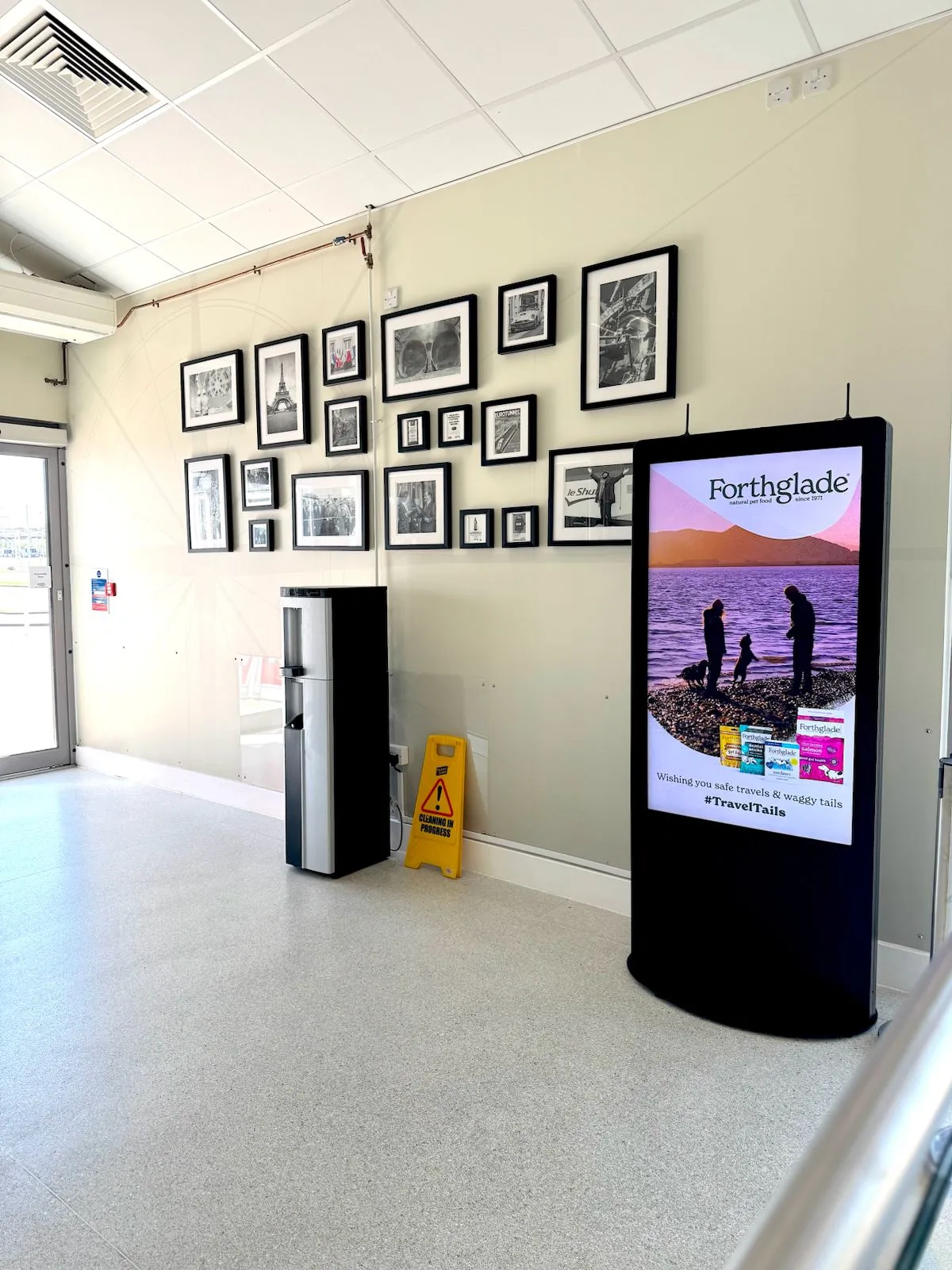
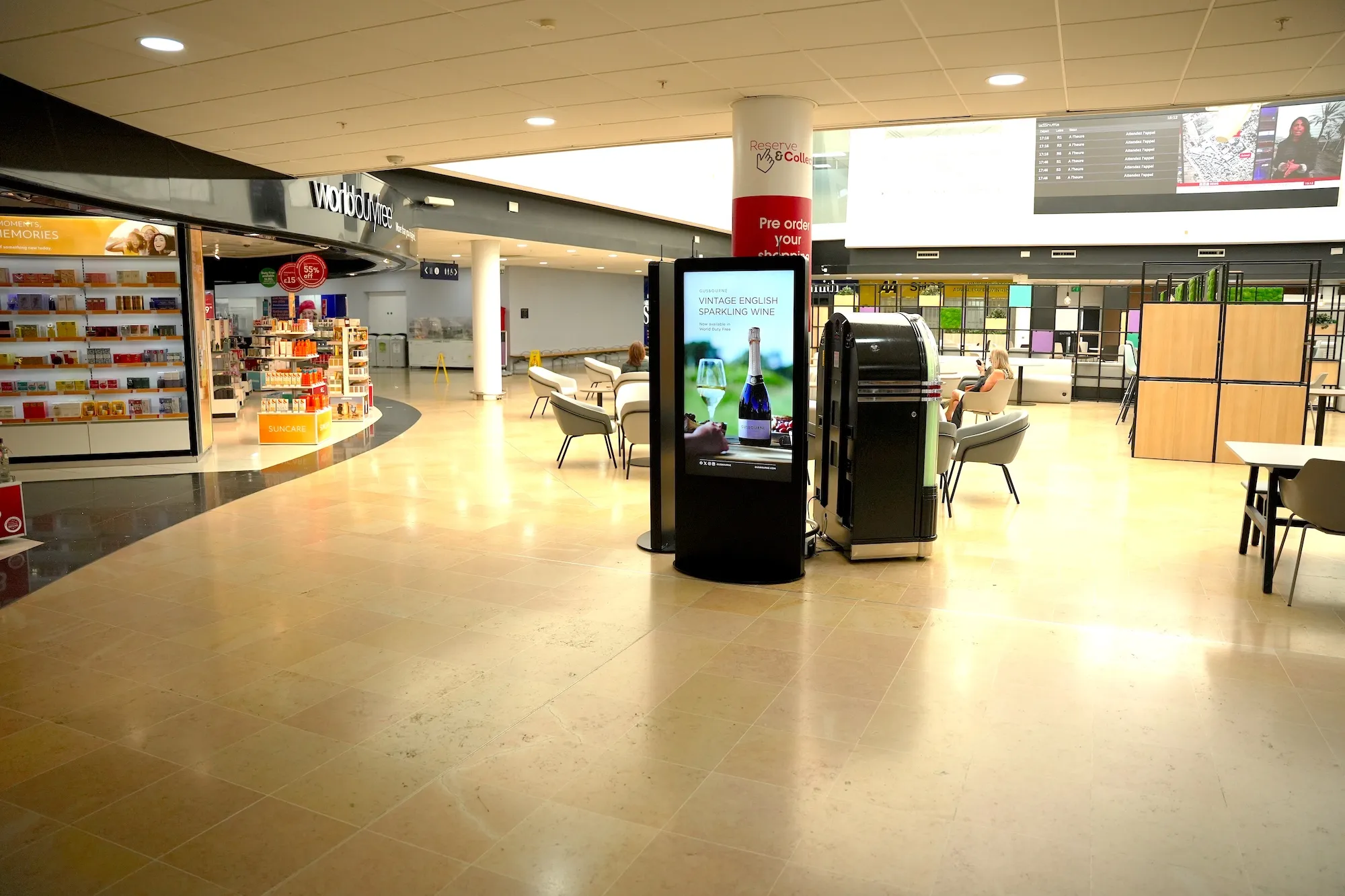
1080 × 1920 pixels is a tall, narrow frame. Landscape creative cropped to fit always looks like landscape creative cropped to fit. Compose for the vertical: stacked type, a single strong subject, generous margins away from the edges.
Motion earns attention — flashing loses it
Gentle movement pulls the eye in a room full of static surfaces. Rapid flashing does the opposite and creates an accessibility risk. If your creative contains flashing imagery, run it through the flicker test before submitting.
A different kind of out-of-home
Waiting rooms are not roadsides
Most out-of-home is seen in passing — a few seconds from a moving car or a busy pavement.
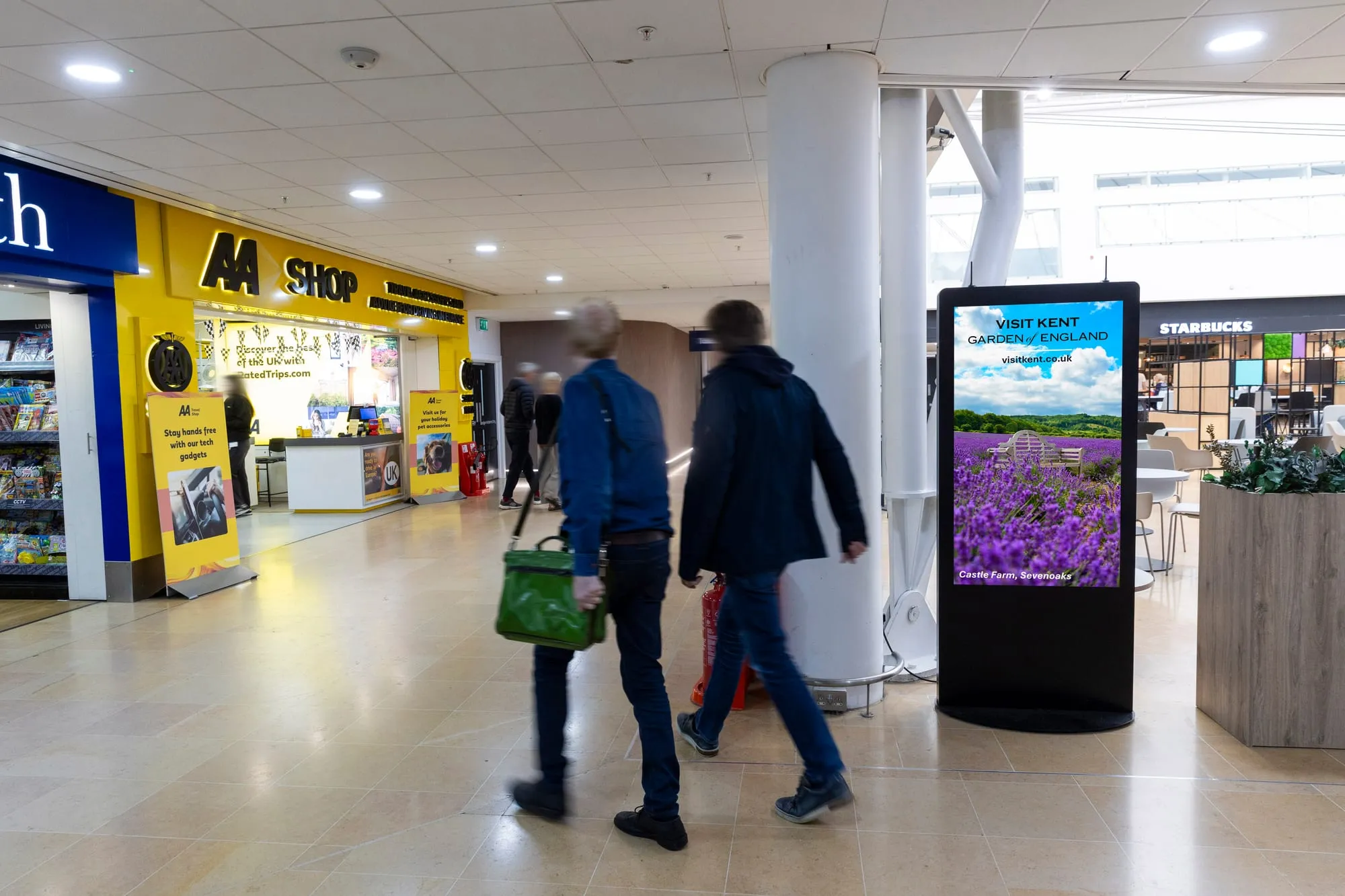
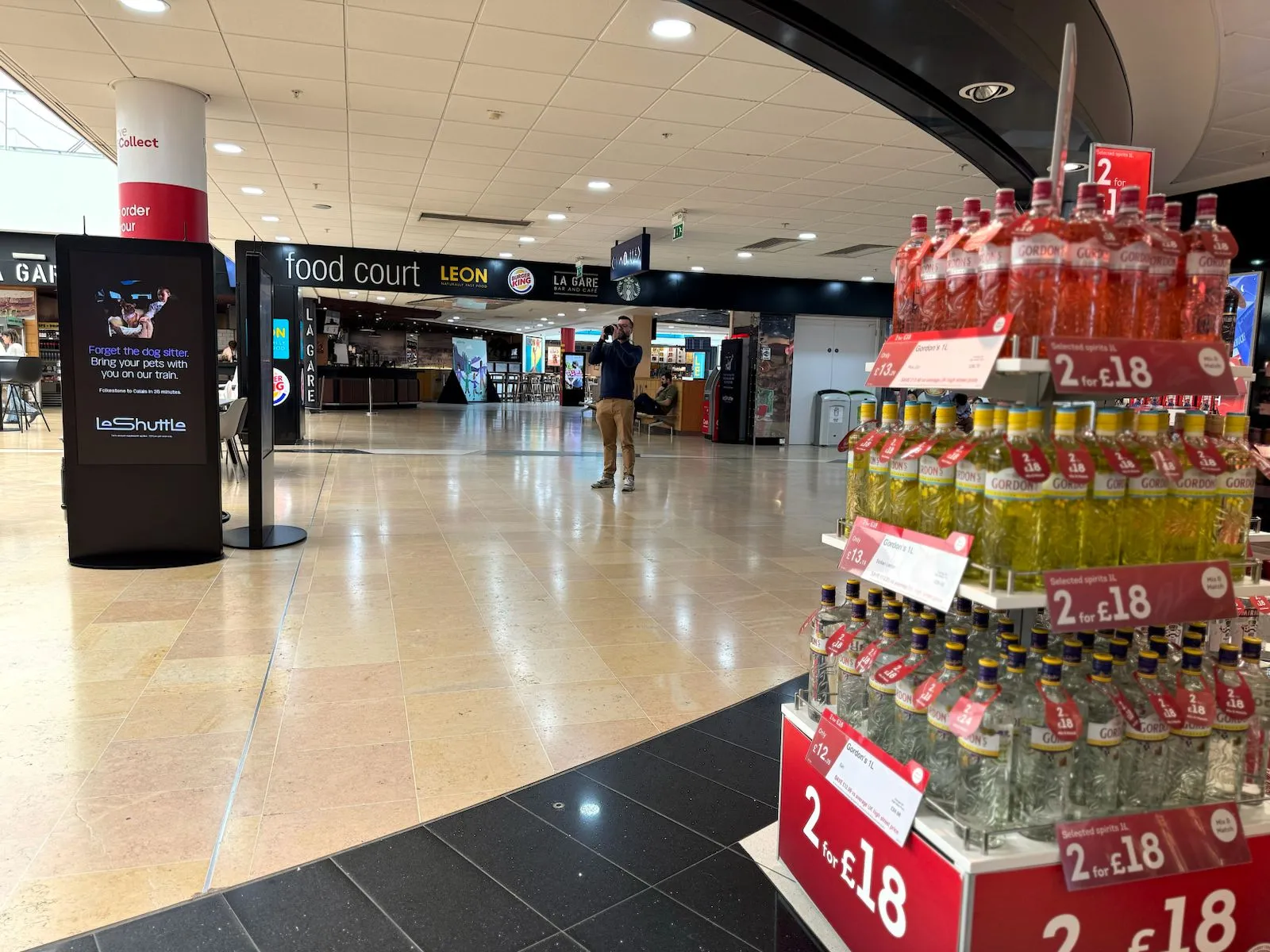
The LeShuttle terminal is different. Passengers are waiting, generally with time to fill, in a space they cannot leave.
That changes what works. Slightly more considered messaging can land here. A QR code has a genuine chance of being scanned, because people are standing still with a phone in their hand. And a destination or attraction has room to be persuasive rather than merely memorable.
Supplying artwork
Getting your files to us
- Final artwork should be supplied 5 working days before the campaign live date.
- Use the naming convention
format_live date(ddmmyy)_campaign name. - Send artwork to marie@summitdigitalmedia.co.uk.
- Files larger than 10MB should be sent via an online transfer service such as WeTransfer.
- We cannot guarantee the live date of a campaign if delivery deadlines are not met.
Compliance & approvals
All artwork is subject to approval.
If your ad contains flashing images, please take the flicker test atonlineflashtest.com.
Scheduling
- Copy allowance
- Up to 5 files every 2 weeks
- Out-of-hours scheduling
- Mon–Fri £300 · Sat–Sun £500
Need a hand with creative?
For artwork delivery or scheduling questions, or if you’d like us to help produce the creative itself, email our team.